







Why Horses Hold Tension
Constant Movement and Physical Demand
Horses are built for movement. Every day their muscles, joints, and tendons carry weight, absorb impact, and stabilize the body. Even small imbalances or repetitive motion can create tight areas that build up over time.
Compensating for Weakness or Pain
When one part of the body feels sore or restricted, horses naturally shift their weight to protect it. This compensation pattern creates new areas of strain, leading to stiffness in the neck, back, shoulders, hindquarters, and fascia.
Stress and the Nervous System
Horses are prey animals with a highly sensitive nervous system. Sudden sounds, pressure, routine changes, herd dynamics, or training stress can keep their body in a heightened state. When that happens, the muscles stay tightened and never fully release.
Ill-fitting Tack and Equipment
Saddles that pinch, bridles that create uneven pressure, or boots that restrict movement can all create tension. Even small equipment issues can cause horses to brace their muscles during training.
Workload and Training Style
Hard work, intense riding sessions, or inconsistent warm up routines place added demand on the body. Without proper recovery, tightness builds session after session until it becomes a full pattern of tension.
Age and Limited Circulation
As horses get older, circulation decreases naturally. Lower blood flow means slower recovery and more stiffness, especially in joints, muscles, and connective tissue.
Why Red Light Helps
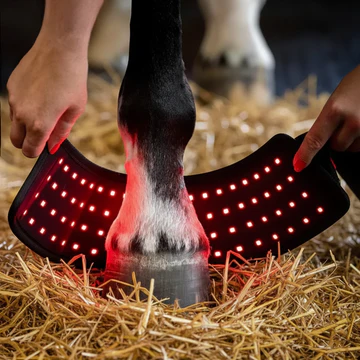
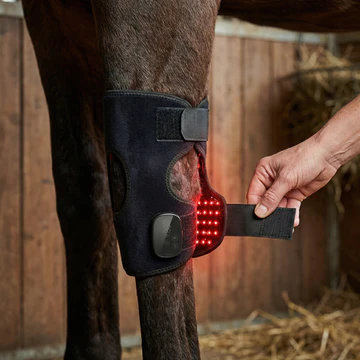
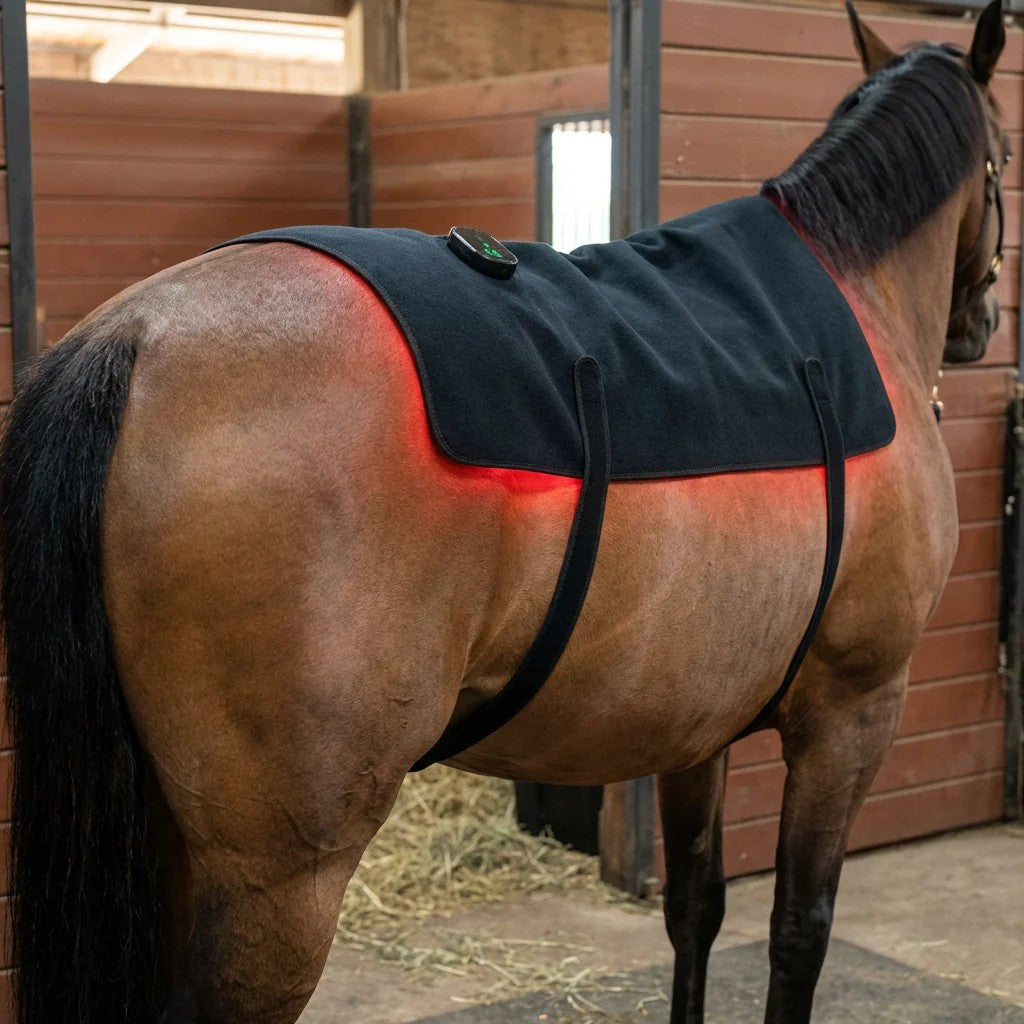
Red and infrared light support the body by improving circulation, relaxing tight muscle fibers, increasing oxygen delivery, and calming the nervous system. It gives horses the reset they need to release tension rather than carry it day after day.